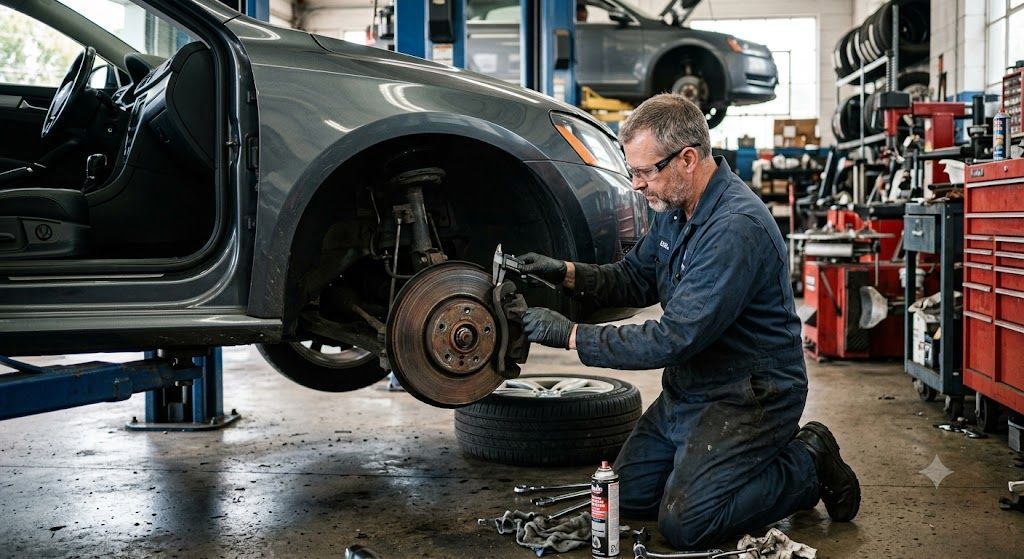
Preparing Your Chassis for Montana Fall and Winter Roads
As autumn arrives across Yellowstone County, drivers in Billings face a distinct shift in road conditions. Dropping overnight temperatures, early morning frost, and uneven asphalt create significant mechanical stress on your vehicle's undercarriage. If you notice steering drift, unusual thuds over bumps, or uneven tire wear, addressing suspension issues early prevents severe handling hazards before snow and ice cover the roads.
Executive Summary: Driving across Montana during seasonal transitions exposes vehicle suspensions to severe freeze-thaw cycles, rough pavement, and gravel washboards. Timely suspension inspection and repair in Billings ensures responsive handling, prevents premature tire degradation, and maintains braking stability on slippery roadways. Autosport Billings provides comprehensive steering, suspension, and factory maintenance services for both European and domestic vehicles.
Key Questions Answered
What does a vehicle suspension system do?
It connects the wheels to the chassis, absorbing road shocks, maintaining tire contact with the pavement, and providing stability during steering and braking.
Why is fall the critical window for suspension repair in Billings?
Cold temperatures stiffen rubber bushings while freeze-thaw pavement creates potholes that accelerate joint wear before winter storms hit.
Can worn shocks or struts increase braking distances?
Yes, degraded dampening allows excessive front-end dive during sudden stops, reducing rear tire traction and extending stopping distances significantly.
Key Takeaways for Montana Drivers
- Suspension wear happens gradually; drivers often adapt to loose handling without noticing compromised safety margins.
- Montana's freeze-thaw cycles and rural gravel roads dramatically accelerate ball joint, strut, and control arm bushing wear.
- A thorough pre-winter chassis inspection identifies loose tie rods and worn shocks before freezing temperatures create dangerous handling issues.
The Mechanics of Vehicle Suspension in Northern Climates
Your vehicle's suspension system is an intricate network of springs, shock absorbers, struts, control arms, ball joints, and sway bar linkages. Together, these components manage two critical jobs: absorbing kinetic energy from uneven road surfaces and keeping all four tires firmly planted against the asphalt. In climates with mild year-round weather, these components experience standard wear over tens of thousands of miles. However, driving in Montana introduces environmental extremes that demand much more from your chassis.
During the transition from late summer to late autumn, temperature fluctuations cause metal components to contract and rubber bushings to harden. Rubber boots protecting delicate ball joints and tie rod ends can crack, allowing road grime, sand, and early season de-icing moisture to penetrate internal bearings. When grease escapes and abrasive debris enters, joint degradation accelerates exponentially.
According to regional automotive maintenance insights from UCDI Garage, pre-winter inspections are essential because sub-zero conditions exacerbate existing chassis weaknesses, while mountain driving and rough surfaces place sustained mechanical loads on steering linkages.
Recognizing the Warning Signs of Worn Suspension Components
Because suspension degradation occurs gradually over time, many motorists unknowingly compensate for diminished steering response and ride comfort. Being mindful of subtle performance changes can help you catch small issues before they escalate into costly repairs or roadside breakdowns.
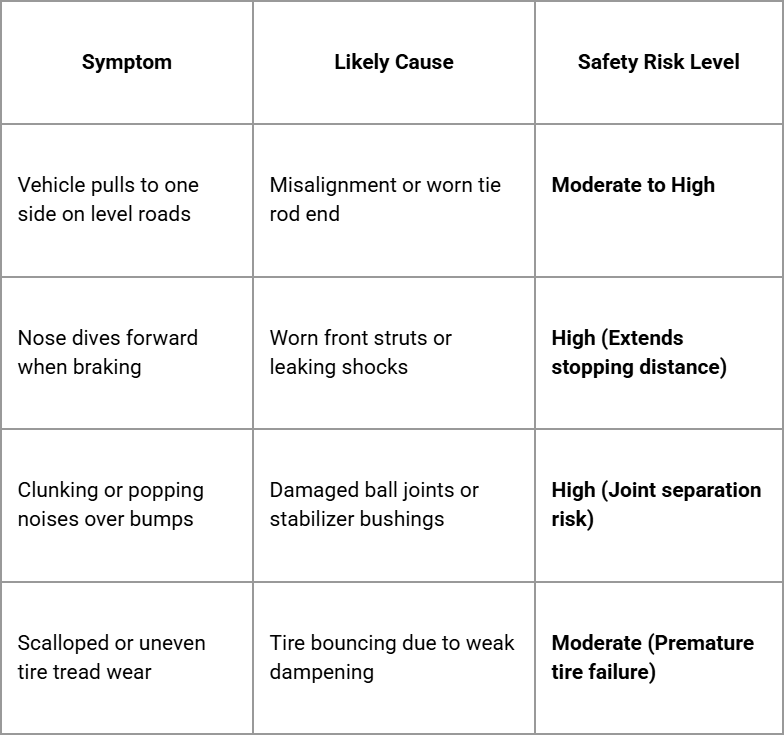
If you experience any of these symptoms while navigating Interstate 90 or local thoroughfares in Billings, having your chassis evaluated by a certified technician is crucial for maintaining vehicle control.
The Direct Link Between Suspension Health and Winter Braking
Many drivers focus exclusively on tire tread depth and brake pad thickness when preparing for winter weather. While both are critical, the suspension system dictates how effectively tires and brakes interact with the road surface. When shock absorbers lose dampening capability, the vehicle experiences body roll during turns and pitch during deceleration.
When you brake on an icy or wet Montana road, worn front struts allow the vehicle's weight to shift violently forward. This unloading of weight from the rear axle significantly reduces rear tire traction, confusing anti-lock braking systems (ABS) and increasing overall stopping distance by several car lengths. Proper dampening keeps weight distribution balanced across all four wheels, giving your tires the contact patch required for safe stops.
For more details on monitoring road safety conditions across the state, regional travel resources like CamCat Books Montana Road Status highlight the role of rapid weather shifts and changing pass conditions in vehicle handling demands.
Tailored Solutions for Different Driving Profiles
Every vehicle owner has unique driving patterns that influence how quickly suspension components wear. Tailoring your maintenance routine to your specific usage profile ensures maximum longevity and safety:
- Daily Urban Commuters: City driving involves frequent stops, sharp turns, speed humps, and curb transitions. Focus on stabilizer link bushings, strut mounts, and power steering fluid checks during regular factory scheduled maintenance.
- Highway and Mountain Travelers: Long-distance commutes and mountain pass travel put sustained aerodynamic and centrifugal loads on struts and wheel bearings. Prioritize high-speed wheel balance and precise four-wheel alignment.
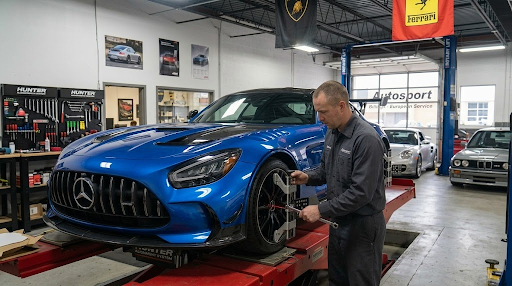
- European Performance Owners: Vehicles from BMW, Mercedes-Benz, Audi, Porsche, and Volkswagen often feature multi-link aluminum suspensions, active damping, or air suspension setups. These systems require specialized diagnostic scanners and exact factory torque specifications.
- Trucks and Towing Vehicles: Hauling trailers or heavy cargo increases rear spring compression and bushing deflection. Regular inspection of leaf springs, heavy-duty shock absorbers, and rear differential mountings prevents sag and instability.
Why Choose Autosport Billings for Your Vehicle Maintenance
When it comes to precision auto repair and suspension service in Billings, Montana, Autosport Billings brings over 50 years of automotive heritage to every job. Located at 470 Lake Elmo Drive, our family- and locally-owned shop combines decades of hands-on expertise with cutting-edge diagnostic equipment.
Founded by Alex Smith—who began his automotive career in 1965—and co-operated with partner Ryan Smith, our team of dedicated professionals specializes in both European Marques (including Audi, BMW, Mercedes-Benz, Porsche, and Volkswagen) and domestic makes (Ford, Chevrolet, GMC, Dodge, Jeep, and Chrysler). Whether you need complex suspension diagnostics, brake repair, scheduled factory maintenance, or climate control service, Autosport Billings delivers honest advice, transparent communication, and master-level workmanship.
Frequently Asked Questions
How often should vehicle suspension components be inspected?
A full chassis and suspension inspection is recommended at least once a year or every 12,000 miles, ideally during seasonal maintenance shifts before winter or after spring freeze-thaw cycles.
What is the difference between a shock absorber and a strut?
A shock absorber is an individual hydraulic damper designed to smooth out road bumps. A strut combines a shock absorber with a structural coil spring and serves as a primary load-bearing pivot for steering and alignment.
Can bad suspension ruin brand new tires?
Yes. Worn struts and misaligned control arms cause the tire to bounce and track incorrectly, creating cupping, feathering, and uneven edge wear that can ruin a new set of tires within a few thousand miles.
Do European vehicles require specialized suspension tools?
Many European models utilize multi-link aluminum control arms, electronic dynamic damping, or air springs that require specialized calibration tools, proprietary diagnostic software, and precise factory torque procedures.
Conclusion
Preparing your car or truck for Montana's challenging autumn and winter roads begins from the ground up. Ensuring that your vehicle's steering, alignment, and suspension systems are in top condition protects your family, preserves your tires, and guarantees confidence behind the wheel. When you need dependable suspension repair in Billings, the experienced technicians at Autosport Billings are ready to keep your vehicle performing at its best.


European Auto Repair Billings MT: The Complete Guide to Keeping Your Luxury Vehicle Running Smoothly